Please visit my new website at: http://www.zachrisso.com
I will not be making any further updates on this blog.
Please visit my new website at: http://www.zachrisso.com
I will not be making any further updates on this blog.
I think I am going to redesign the look of the blog now that the focus has shifted toward photography. The old layout doesn’t really match the new focus. With any luck, I will be able to create a new look that I like today.
Well, here is the batch of the best photos I’ve taken this past month. As you can see, I’m still being picky. I should have a lot more to post once the semester starts. Until then, here you go.

Piano

The White Wall

Phoebe 08-15

Untitled 08-151

Untitled 08-112

Untitled 08-11
Well, I am going to go ahead and jump on the bandwagon that seems to be going around these days. I am going to attempt to shoot at least one photo on film a day. I say “at least,” because I don’t want to limit myself to jut that one photo. However, I think I need to be more specific in what or how I shoot… but I’m not sure how.
Any suggestions?
As some people know, Kodak has a tendency to be very generous at certain times of the year. This time, they posted a contest on Flickr where they would give away 10 rolls of expired film to 400 people. Well, I never win anything, so I was surprised to find that I have won when I checked my inbox today. I should receive my package within the next two weeks or so. I am excited to find out what types of film I won. They had a couple of different kinds, and the winners just get a random grab bag of film.
Now, I am not just posting this to brag, of course. I also wanted to mention that since I got about $40 worth of film for free, I will be posting color photos eventually, which really is not something I normally do, since I normally only shoot b/w film with the exception of Polaroids. The only problem is that color film processing is a pain in the ass, so I send it out to be developed instead of doing it myself.
Well, needless to say, I didn’t accomplish my goal. Instead, I accomplished a whole 12 photos on a roll of color negative film. Yes, I am an overachiever. To make up for it, I plan on taking my Kodak Brownie Hawkeye out with me today when I go out to run errands. Hopefully I will be able to develop them this evening so I can upload them tonight once they are dry.
EDIT: None of the photos were really satisfactory, in my opinion… at least not good enough to post online.
Artscape is an annual art festival held in Baltimore, MD, USA that occurs mid-July. It takes place in the majority of the Bolton Hill section of the city, which happens to be on my college campus. I’ve decided that since several friends will be coming in for the festival, it would be a good excuse to take an exorbitant amount of photos. Normally, I cannot take more than a few photos a day because I just can’t seem to let loose. I’m not sure if this is a good or a bad thing. Therefore, I am going to force myself to take three rolls 36 exp film: one color negative, one slide, and one b/w. Artscape only lasts for three days, so I must take a roll a day. Let the experiment begin!
Here is a photo dump from the last two weeks. As you can tell, I am relatively picky in what I post, perhaps too much so. They were taken with a Holga 120n and a Nikon FM2n. The scan quality of them is awful, so I apologize. At some point, I will use the school’s negative scanner to actually scan high-quality negatives. That probably won’t be until I am ready to start compiling them into my new book.
As I have just realized I haven’t mentioned my new book in awhile, I shall do so now. I have finally hammered out the details for the photo book and it will be based on the idea of human identity. I am giving myself a year to work on it, so I am not rushed to complete it, but I still have a goal in mind of when to finish. Look for updates on the book throughout the next year.
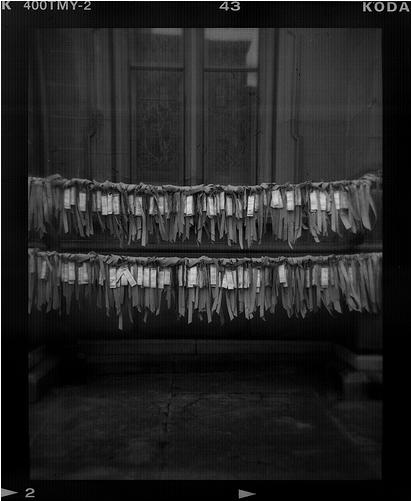
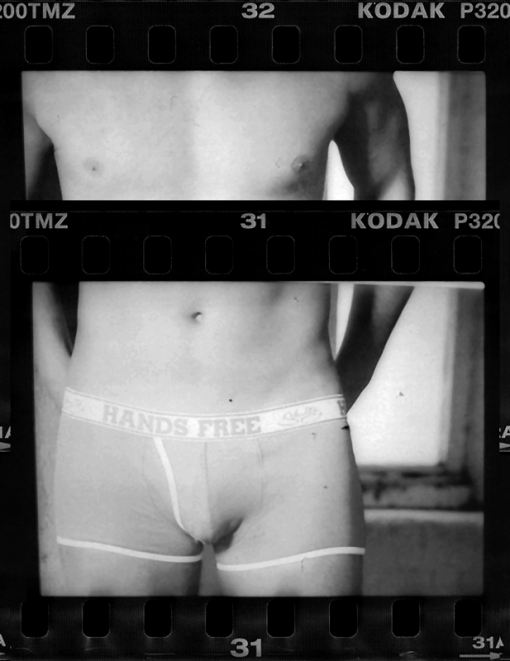
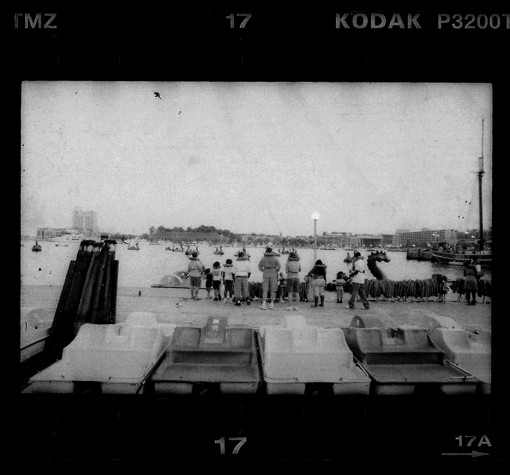
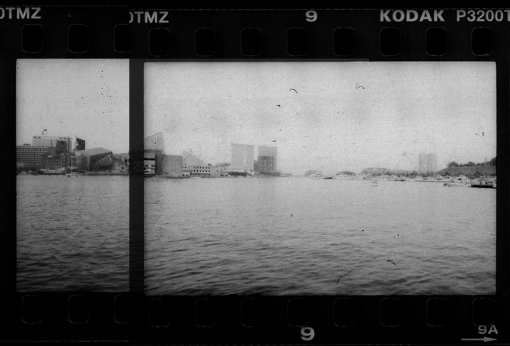
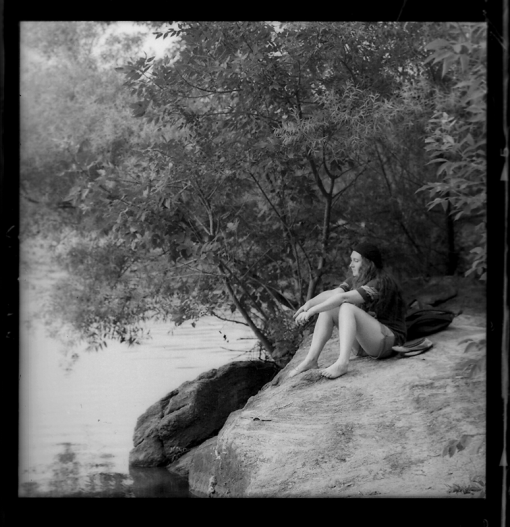
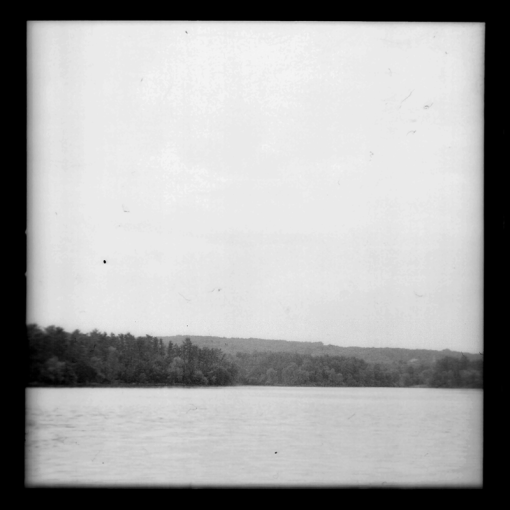
I went to the Loch Raven Resevoir two days ago with a couple of friends and my Hasselblad came with me. I loaded it up with some Kodak Tmax 400 film and off we went. I developed them myself that night, which I enjoy immensely, and figured out how to scan them on my cheap flatbed scanner.
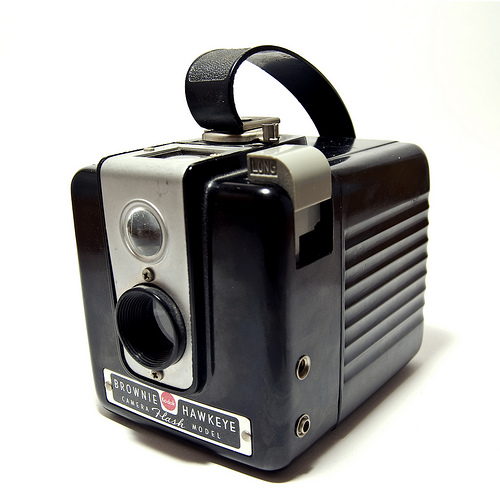
I found an old Kodak Brownie Hawkeye camera when cleaning out my mom’s house, so I loaded it up with some 120 film (with modified spool) and I plan on taking some photos tomorrow with it to test it out. It is supposed to take 620 film, so I had to cut off the edge of the spool for it to fit in the camera.
Since I will be out and about anyway, I loaded some of the same film into my Holga 120n camera. I have never used the 6×4.5 mask with it before, I’ve only ever used it for 6×6 negatives.
I have two boxes of photo chemicals being delivered tomorrow, so I will be able to develop the photos tomorrow night with any luck. The past two times the UPS guy got here, he didn’t just leave the packages here, he left a notice instead. I am going to have to write a note to tell him to leave them this time, so I can do the developing tomorrow rather than have to wait.
 thecapitala.wordpress.com